Lindridge St Lawrence CE Primary School
English
At Lindridge St Lawrence CE VA Primary School, high-quality books are at the heart of our English curriculum, helping children to 'discover life in all its fullness'. Through reading, writing, speaking and listening, children learn how to share their ideas, understand others and make sense of the world around them. Reading introduces children to new experiences, places and perspectives, broadening their horizons and developing their knowledge, imagination and confidence. We want every child to develop a love of reading and language, giving them the skills they need to flourish both in school and beyond.
Early Reading and Phonics
Reading is an essential skill that underpins all areas of learning and opens the door to lifelong opportunities.
The government strongly recommend the use of synthetic phonics when teaching early literacy skills to children. Synthetic phonics is simply the ability to convert a letter or letter group into sounds that are then blended together into a word.
Here at Lindridge St Lawrence CE Primary School, we are using the Read Write Inc (RWI) programme to get children off to a flying start with their literacy. RWI is a method of learning based upon letter sounds and phonics, and we use it to aid children in their reading and writing. Reading opens the door to learning. A child who reads a lot will become a good reader. A good reader will be able to read more challenging material. A child who can read more challenging material is a child who will learn. The more a child learns, the more he or she will want to find out.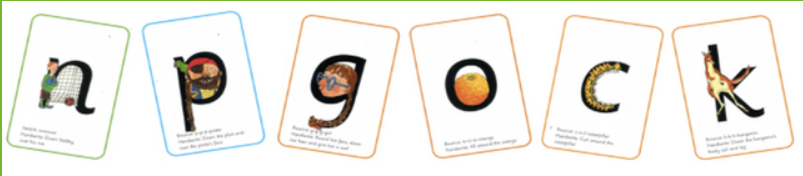
Using RWI, the children learn to read effortlessly so they can put all their energy into comprehending what they read. It also allows them to spell effortlessly so they can put all their energy into composing what they write. The children are assessed regularly and grouped according to their ability. They will work with a RWI trained teacher or teaching assistant. In addition to the RWI, children will also be working on writing skills in their classes with their own teacher.
The Read Write Inc leader at Lindridge St Lawrence is Mrs Hadley. If you have any questions or need any guidance on the programme, please pop into the school office or give her a call and she will arrange an appointment for you.
Reading
When using RWI to read the children will:
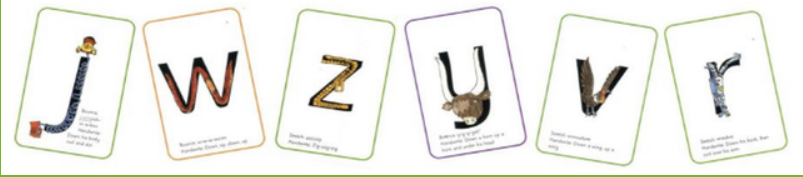
Learn 44 sounds and the corresponding letter/letter groups using simple prompts.
Learn to read words using sound blending (Fred talk).
Read lively stories featuring words they have learnt to sound out.
Show that they comprehend the stories by answering 'Find It' and 'Prove It'.
Writing
When using RWI to write the children will:
Learn to write the letter/letter groups which represent the 44 sounds.
Learn to write words by saying the sounds and graphemes (Fred fingers).
Learn to write simple then more complex sentences.
Compose stories based on story strips.
Compose a range of texts using discussion prompts.
Talking
When using RWI the children will also work in pairs:
To answer questions.
To practise every activity.
To take turns talking and listening to each other.
To give positive praise to each other.
Blending
Help your child learn to read words by sounding-blending (Fred talk) eg. c-a-t = cat, sh-o-p = shop. Children learn to read words by blending the letter-sounds that are in the Speed Sounds set. Help your child to say the pure sounds ('m' not 'muh', 's' not 'suh' etc.) as quickly as they can, and then blend the sounds together to say the whole word.
Spelling
Once your child starts on green level reading and writing books, they will be completing spellings. These spellings support the learning that is taking place during phonic lesson's and results are recorded in their book. Please support your child at home with learning their spellings. As children progress through the levels, the amount of spellings they bring home will increase.
Reading Books Sent Home
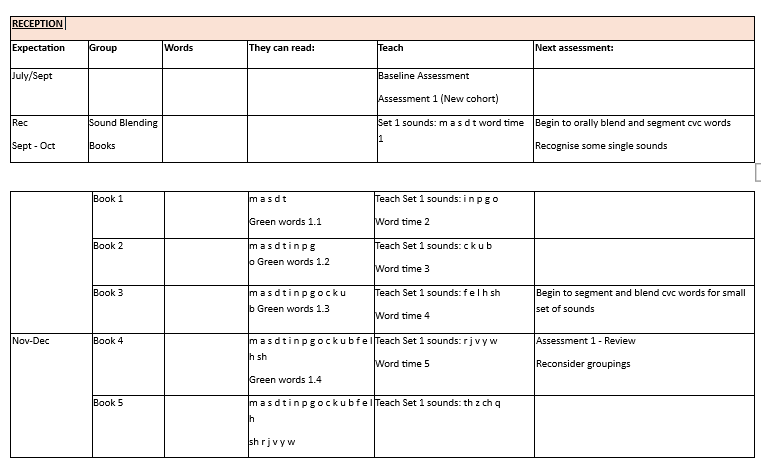
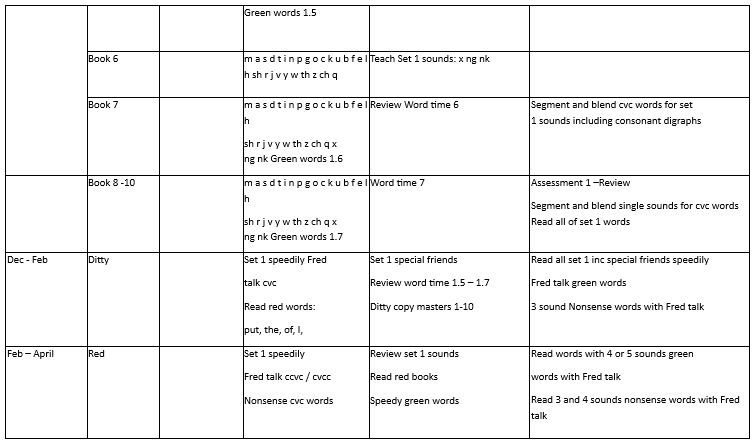
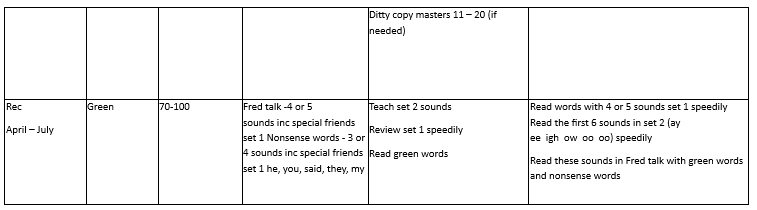
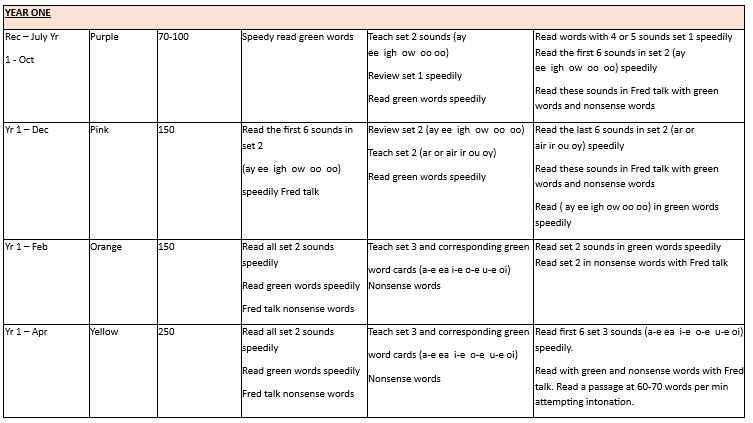
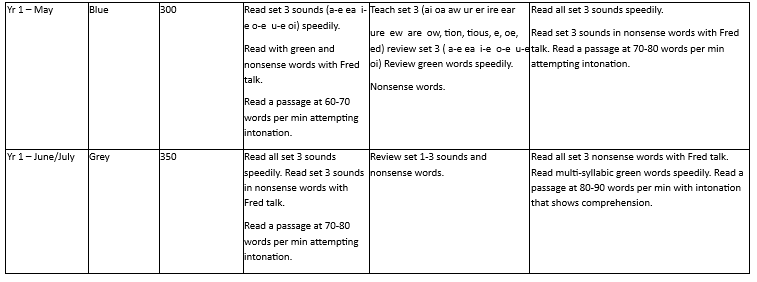
Children in Reception who are learning the first 44 letter sounds and are not blending fluently will bring home sound sheets to practise. Once children can blend fluently and know the first 44 sounds they will bring home a red Ditty book. Children on Green level to Orange level will bring home a RWI book and these will be changed every 3/4 days.
Children on Yellow level to Grey level will also bring home a RWI book as these books are lengthier, these will be changed once a week.
Read Write Inc Books: Please encourage your child to read through the speed sounds page first, then the green and red words page and then check your child understands the meaning of words on the vocabulary check page, before they then start reading the book. Your child will have read this book at least three times before they bring it home. They should be able to read this book with fluency and expression by the time they bring it home, and they should have a good comprehension of what the book is about. At the back of the book are find it/prove it questions for you to complete with your child.
Reading
Whole Class Reading
From Year One to Year Six, reading is taught through a daily 30-minute discrete reading lesson using our Linked Texts programme. Carefully chosen, high-quality texts provide rich opportunities for children to develop the key reading skills outlined in the National Curriculum, including retrieval, inference, prediction, summarising and vocabulary development. Strong links between our Reading and Writing units enable children to encounter, discuss and apply ambitious vocabulary across both areas of learning, deepening their understanding of language and improving their ability to communicate effectively.
A key focus of our reading curriculum is the development of fluency. Through strategies such as echo reading and choral reading, children learn to read with increasing accuracy, expression and confidence. These approaches support comprehension by allowing children to hear and practise fluent reading, while also fostering a love of literature. By engaging with high-quality texts every day, children develop the skills, knowledge and enthusiasm needed to become fluent, thoughtful and lifelong readers.
Reading for Pleasure
Each classroom has a dedicated book area containing 25 carefully selected Recommended Reads for that year group. These books have been chosen using the themes from Reading Reconsidered by Doug Lemov and include a rich mix of classic and contemporary texts. Our recommendations expose children to a wide range of authors, characters, cultures and experiences, helping to broaden their reading horizons and foster a lifelong love of books. We encourage every child to read all 25 books during the year, either independently or with an adult, and children who complete the challenge receive a special reward to celebrate their achievement.
Teachers also dedicate 15 minutes each day to reading aloud from a carefully chosen picture book or class novel. These daily story times expose children to rich language, engaging stories and a wide range of authors, helping to foster a genuine love of reading. By regularly sharing and enjoying books together, children become immersed in literature and develop the enthusiasm, curiosity and confidence needed to become lifelong readers.
Performance Poetry
We have a carefully planned performance poetry curriculum that runs from Nursery through to Year 6, helping children develop a lifelong appreciation of rhymes, songs and poetry. We believe that engaging with language in this way supports confidence, expression, fluency and a love of reading.
Every six weeks, each class focuses on a carefully chosen poem to learn and perform using the Readers’ Theatre approach. Through repeated reading, discussion and performance, children explore rhythm, meaning and expression while building their speaking and listening skills. This regular opportunity to perform helps pupils develop confidence, teamwork and enjoyment in sharing poetry with others.
Writing
At our school, we use Helicopter Stories in Reception as a powerful approach to developing early writing skills. By inviting children to create and tell their own stories, we give them a real, authentic purpose for communicating their ideas. Children see their words valued as adults scribe their stories and bring them to life through drama and play, helping them understand that storytelling and writing are meaningful ways to share their thoughts, experiences and imagination.
This approach fosters a love of storytelling and writing for pleasure from the very earliest age. Children become confident creators of their own narratives, developing vocabulary, oral language, creativity and an understanding of story structure long before they are able to write independently. By nurturing a genuine enjoyment of composing and sharing stories, Helicopter Stories lays strong foundations for children to see themselves as writers and to develop positive attitudes towards writing throughout their school journey.
Key Stage 1
In Key Stage 1, writing is taught through high-quality, carefully chosen texts that provide meaningful contexts for children to develop their skills as writers. Reading and Writing units are closely connected, enabling children to explore and apply ambitious vocabulary, language patterns and ideas across the curriculum. Children are encouraged to write for authentic purposes and audiences, helping them understand the value of writing as a powerful tool for communication. Alongside this, they develop their knowledge of grammar, punctuation and spelling, learning how to apply these skills effectively within their own writing.
Key Stage 2
In Key Stage 2, writing continues to be inspired by high-quality literature, with strong links between Reading and Writing ensuring children build a rich vocabulary and a deeper understanding of language. Through engaging texts and meaningful writing opportunities, children learn to communicate ideas clearly, creatively and effectively for a range of authentic purposes. Grammar, punctuation and spelling are taught within the context of writing, allowing children to understand how these elements enhance meaning and impact. As they progress, children become increasingly confident and independent writers, able to adapt their writing to suit audience and purpose while expressing their ideas with precision and flair.
Children have regular opportunities to practise their writing skills across other areas of the curriculum, such as history, science, RE and geography. This allows them to apply their grammar, punctuation, and composition skills in a range of contexts, deepening their understanding and helping them write with purpose. It also supports the development of subject-specific vocabulary and knowledge while reinforcing their writing abilities.